Felipe Cortés ENES Hire me
Case study · AI in production

An AI waiter that answers from the real menu

Dalken is a restaurant platform: QR menu, AI waiter, orders, kitchen screen and bills. I designed it, built it and run it on my own.
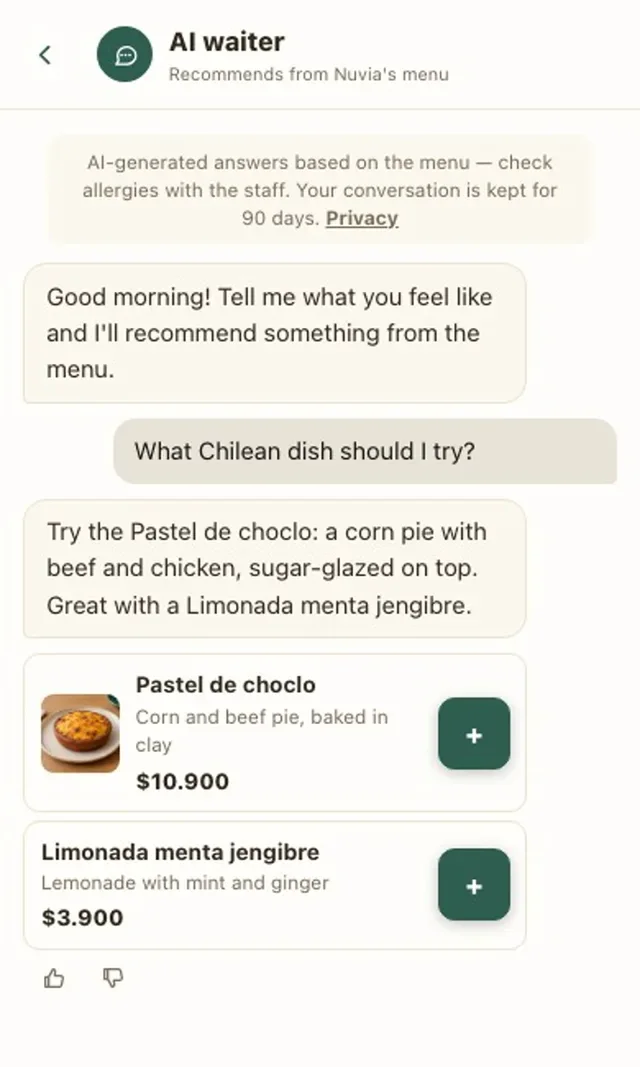
A guest asks in English which Chilean dish to try; the AI waiter recommends pastel de choclo and a lemonade, each as a menu card with price and an add button.
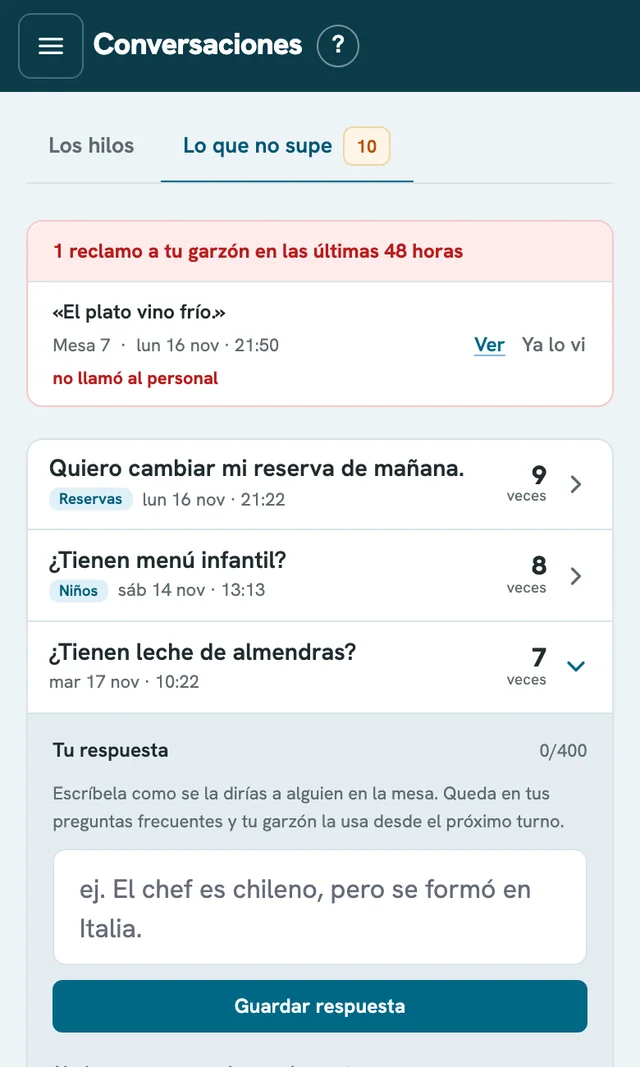
The owner's list of questions the waiter could not answer, each with how many times it was asked, and a box to answer one of them once.
171 / 173test questions answered right, each asked twice
4.0 stypical wait for an answer
5,203automated tests before each release
80 msp95 response with 100 restaurants under load
Where it stands. Live at app.dalken.ai since July 2026 with a demo restaurant. I am selling it to restaurants in Chile; there are no paying customers yet. The app is in Spanish; the waiter answers in the guest's language. I build with AI coding tools (Claude Code); the decisions, the measurements and production support are mine.
The problem

Friday, 9 p.m., and the floor is short of hands.

Guests ask the same things again and again: what's in this dish, is there egg, what do you recommend, and tourists ask in English. Many menus are still a photo or a PDF.

A generic chatbot doesn't solve it. It invents dishes and prices, and with allergies a wrong answer is not a small error. The waiter has to answer only from what the restaurant serves, and say so when it doesn't know.
From the table to the kitchen

One product for the whole service.

  1. The guest scans the QRMenu with photos, prices and allergens.
  2. Asks the waiterIn any language. Every dish it names comes back as a card from the menu.AI
  3. Staff confirmsOn the waiter's phone, with the table's allergies on top.Person
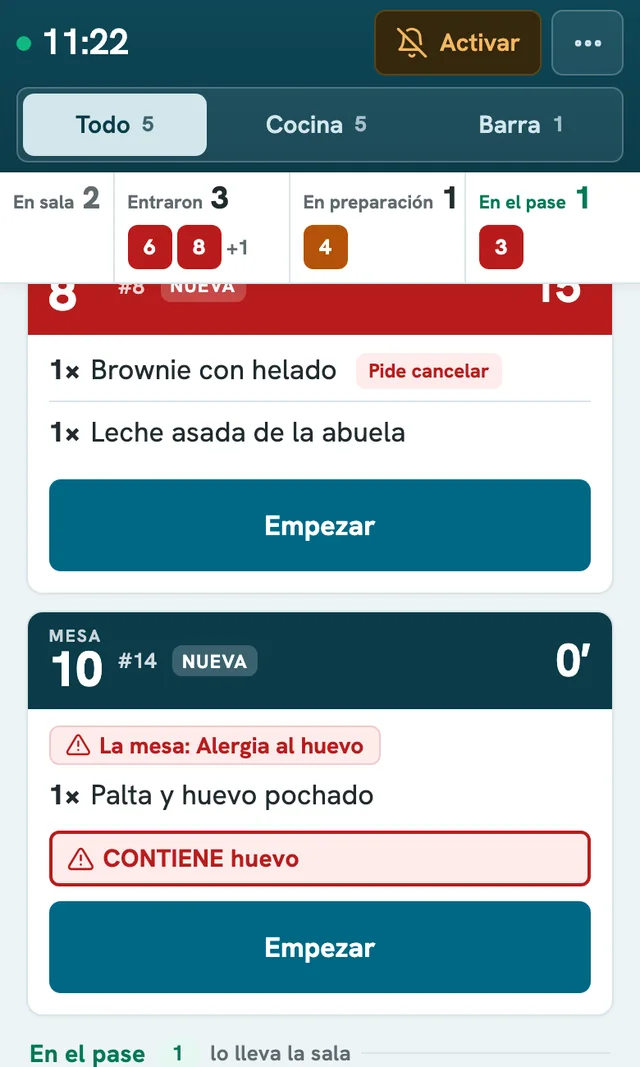
  4. The kitchen cooksEach dish with its waiting time, and a red warning when it contains the allergen.Rules
  5. The bill is splitBy guest, with tip and payment method.
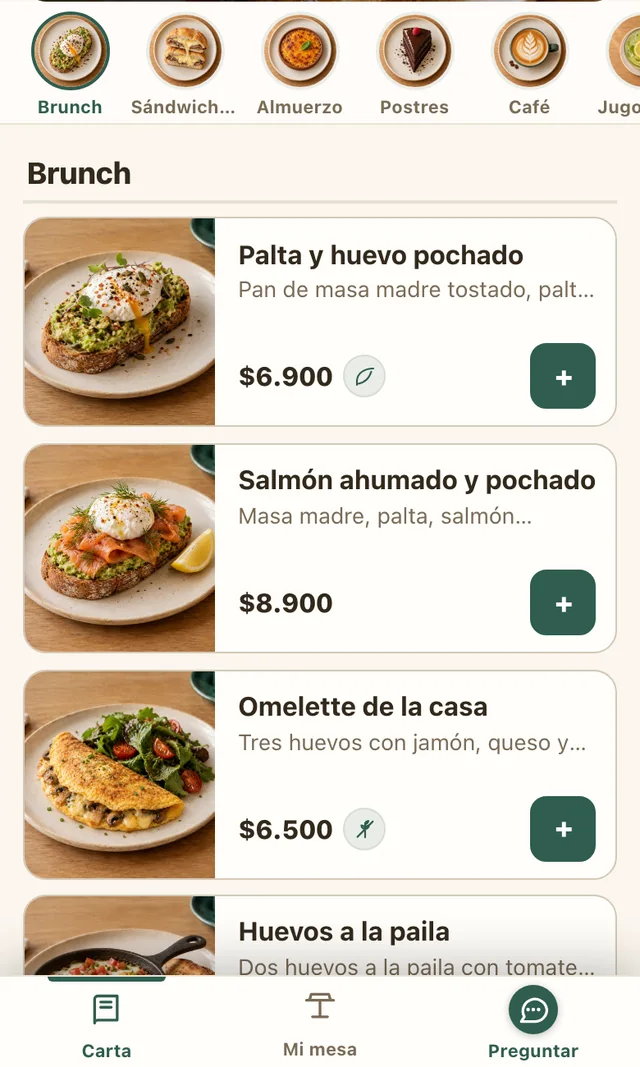
The guest's menu on a phone: category photos on top and brunch dishes with photo, price and an add button.
Kitchen screen: the ticket for table 10 says the table is allergic to egg, and the dish is marked as containing egg.
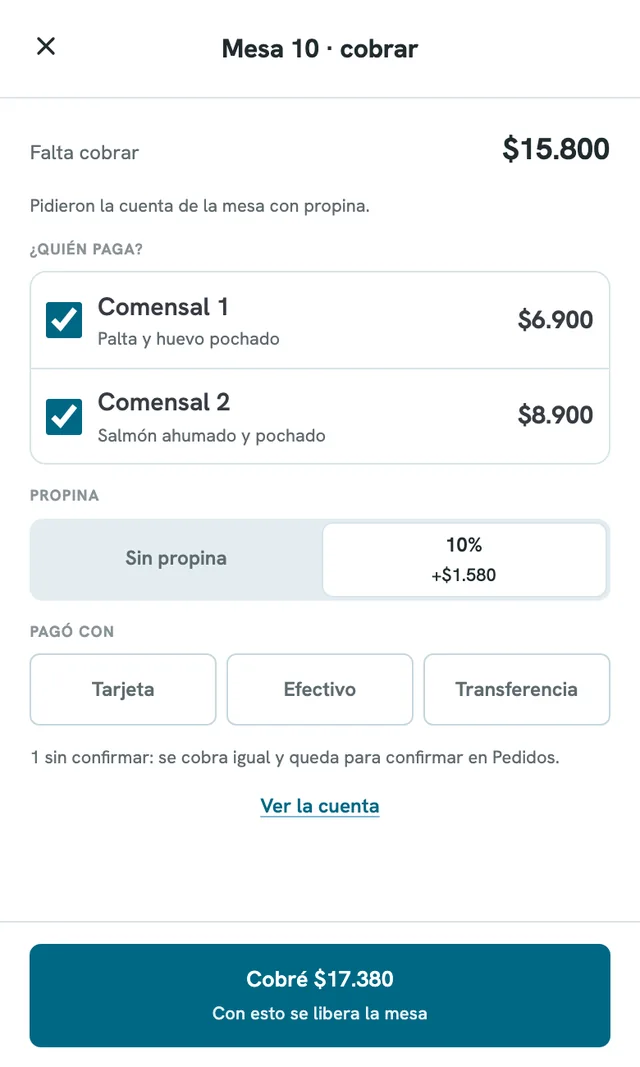
Charging table 10: two guests with their own amounts, tip options and payment method.
  1. The menuOpened from the QR on the table. Ordering needs the table's code.
  2. The kitchen ticket"The table: allergic to egg" and "CONTAINS egg". This warning does not depend on the AI.
  3. The billWho pays what, with tip and how they paid.
How the AI is kept honest

The model talks. Tables and code hold the facts.

  1. Facts live in tablesPrices, hours, sold-out dishes and allergens, never free text.Rules
  2. The model reasons over littleIt gets only that context and returns JSON with the dishes it recommends.AI
  3. Code checks every dishNot on the menu, sold out or against an allergy: caught before the guest sees it.Rules
  4. "I don't know" goes to the ownerGrouped and counted. The owner answers once; the waiter uses it from then on.Person
How I know it works

A bench of 173 questions, each asked twice.

Allergies, sold-out dishes, budgets, a closed restaurant, prompt-injection attempts, 15 cases in other languages. A question passes only if both answers are right, so a lucky answer doesn't count. On top, 71 full conversations with simulated guests, graded by a stronger model. Every failure is read in full.

A decision the numbers made: faster was possible, and it got more wrong.

Questions failed out of 173. On the right, how long the guest waits.

  1. Small model, short thinking (kept)2 · 4.0 s
  2. Same model, no thinking13 · 1.2 s
  3. Rules decide when to think11
  4. Previous model version12 · 1.9 s

Without thinking, the waiter said "no gluten" without the data. Thinking stayed, and the seconds were won around the model.

The limit of this measurement. I wrote the bench, not real guests. Until there are paying restaurants, it measures the cases I could think of.
Built to run, not just to demo
Under load80 msp95 with 100 restaurants at 5 AI turns per second, zero errors. One blocking call used to freeze the app at 1,820 ms.
Tested5,203automated tests, plus a crawler that opens every link on ~190 screens with each of the four roles.
Safe changes97database migrations applied in production without losing data, in small steps.
For your project

What this means for you

Technical detail

Stack. Python, FastAPI, PostgreSQL, Claude API, htmx, Gmail API, Railway.

Many restaurants, one system. Four roles (owner, manager, waiter, kitchen). Every record belongs to one restaurant, and tests check that no one can open another restaurant's data.

The seconds, won around the model. A "checking the menu" indicator after 2.5 s, and prompt caching: about 4,870 of the 5,500 tokens of each request are reused, which roughly halves the cost per answer.

Watched. An operator panel answers "is everything OK?": background jobs, AI failures and waits, email quota, configuration and version.

More than one channel. Messages come in through a common interface; Gmail is connected by OAuth, so a new channel doesn't touch business logic.

Written for real users. A manual per role, by screen, with screenshots taken automatically from real walk-throughs, so it never goes out of date.

Not shown. The source code is private. Screenshots come from the demo restaurant and a sample restaurant; no customer data.

Send me five sample documents.

I'll tell you what can be automated, how it would be measured and what it costs. In writing, no call needed.